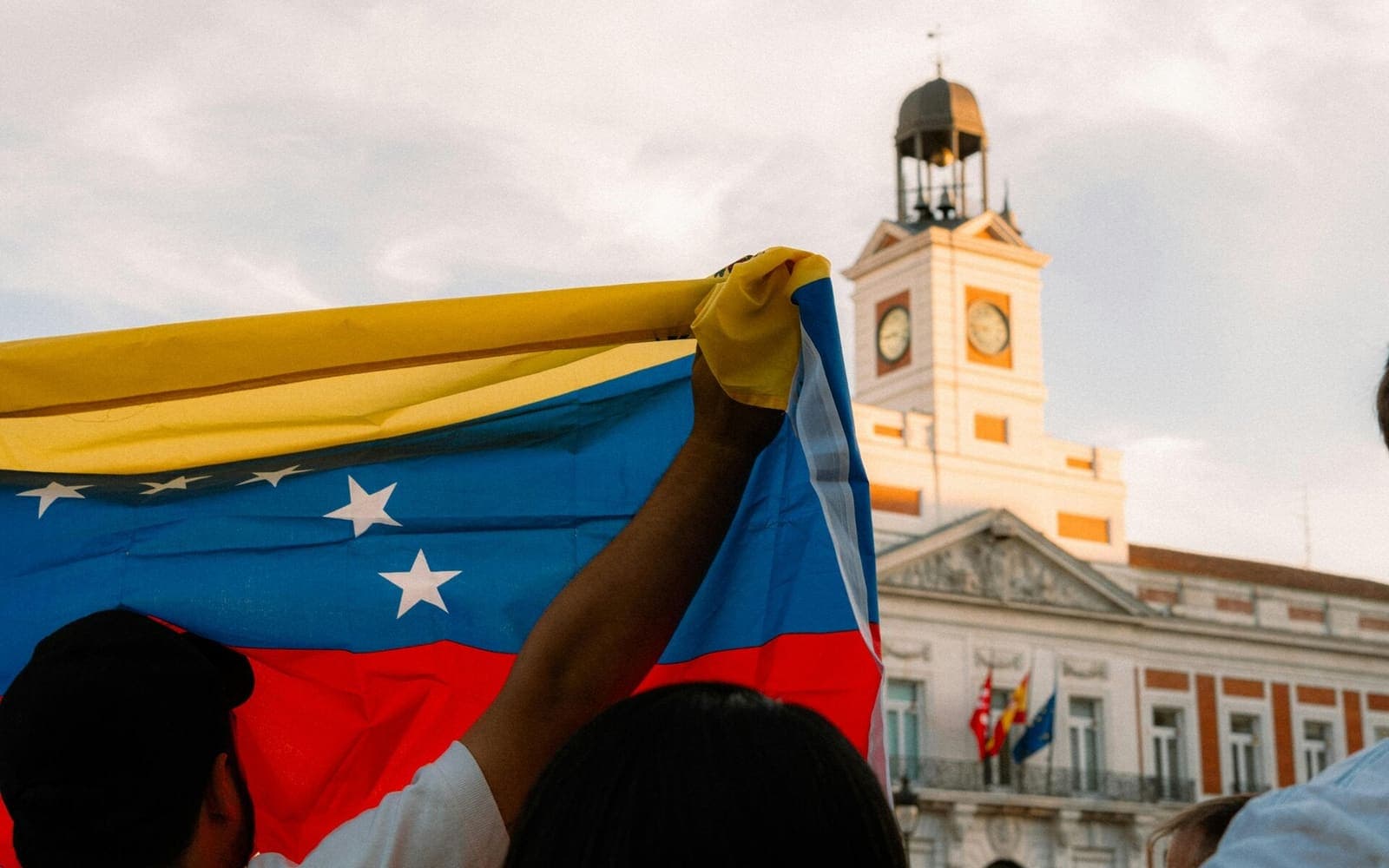
Spanish nationality: which studies exempt you from the DELE and CCSE, and which do not
Since 2016 the only study-based route out of the DELE and CCSE has been schooling in Spain plus a pass in ESO (compulsory secondary education). We look at Bachillerato, vocational training and degrees, the other exemptions and what to do if your application is at risk.

Written by Coda Nuance Legal
Published on

In this article10 sections
Updated on 27 September 2026. There has been no change in the law: since 2016 the only study-based exemption from the DELE and the CCSE that the rules provide has been for applicants who were schooled in Spain and passed ESO (Educación Secundaria Obligatoria, compulsory secondary education). What has changed is how the rules are applied: the Ministry sticks to the wording, and the Audiencia Nacional (National High Court), at the Government's request, has already annulled several nationality grants made without those tests, in judgments that can be appealed to the Supreme Court.
When we published this article in November 2025, we warned that a university degree or a Formación Profesional (vocational training, FP) qualification no longer got you out of the Instituto Cervantes exams. Today the picture is clearer. We explain what the rules say, which qualifications count and which do not, and what you can do depending on where your application stands.
What the law requires to show your integration
To obtain Spanish nationality by residence you must show, in addition to the period of legal residence and good civic conduct, a sufficient degree of integration into Spanish society (art. 22.4 of the Código Civil, the Civil Code). Royal Decree (Real Decreto) 1004/2015, which regulates the procedure, sets out how this is proved in its article 6:
- the DELE at level A2 or above, the Instituto Cervantes Spanish-language diploma;
- the CCSE, the test of constitutional and sociocultural knowledge of Spain, also run by the Instituto Cervantes.
Order (Orden) JUS/1625/2016 implements these tests in its article 10, which is where the exemptions and waivers (dispensas) are found.
The only route through your studies: passing ESO in Spain
Article 10.5 of Order JUS/1625/2016 allows both tests to be waived for applicants who "have been schooled in Spain and passed compulsory secondary education" (ESO). Both conditions must be met: you must have studied in the Spanish education system and passed ESO.
That sentence has been in the Order since 2016. The 2022 reform (Order JUS/1018/2022, in force since 29 October 2022) added that, in this specific case, you do not need to request the waiver separately: you file the nationality application with the documents for your studies and the Ministry checks the qualification. The Instituto Cervantes puts it the same way in its FAQs: a full waiver for those who hold ESO from Spain.
Article 10.5 does not mention Bachillerato (upper-secondary school-leaving qualification), vocational training or university degrees: it has only ever referred to ESO. However, the waiver application form that the Ministry itself used included a box for applicants who had "completed and passed official intermediate or higher studies" in which they had enrolled in Spain, in Spanish. This is recorded in the Audiencia Nacional judgment of 28 January 2026, discussed below, in relation to a waiver requested in 2021. Many guides still list those studies among the exemptions.
The approach today is different. The Ministry's electronic office only lets you apply online for a waiver on the grounds that you cannot read or write or have learning difficulties. In the agreements through which it is challenging past grants, the Government argues that article 10.5 must be read strictly, without extending it to other studies, and the Audiencia Nacional requires the tests to have been passed, or a waiver to have been expressly granted, before you apply for nationality. For someone who completed Bachillerato or vocational training in Spain, in Spanish, without having done ESO here, the question is not entirely settled, but the prudent course is not to rely on those studies and to take the tests.
What happens in each case
| Your situation | Are you exempt from the tests? | What you should do |
|---|---|---|
| You passed ESO at a Spanish school | Yes, from both | Attach the certificate or academic transcript to the application |
| You did Bachillerato, FP or a degree in Spain after passing ESO here | Yes, but because of ESO | Prove ESO; do not rely on the higher qualification alone |
| You entered Bachillerato, FP or university with a foreign qualification or the entrance exam for over-25s | Do not count on it | Take the DELE (unless exempt) and the CCSE |
| Your foreign secondary qualification has been recognised as equivalent to the ESO certificate (Graduado en ESO) | No: you were not schooled in Spain | Take the tests |
| You hold a master's degree or a vocational certificate (certificado de profesionalidad) | No | Take the tests |
The Audiencia Nacional has already annulled a grant made to someone who had requested the waiver by ticking that box. In its judgment of 28 January 2026 (appeal 1119/2025, ECLI:ES:AN:2026:291), the person had relied on the university entrance exam for over-25s and two years of a degree at a Madrid university. The Consejo de Ministros (Council of Ministers) agreement that gave rise to the case, which the judgment reproduces, took the view that this is not equivalent to ESO in Spain or to having completed intermediate or higher studies. The court added that the waiver had never been expressly granted and that the tests had to be passed before applying for nationality.

Other exemptions that do exist
- Under-18s and persons whose legal capacity has been modified by a court (this is the Order's wording, which predates Law 8/2021): they take neither test and provide certificates from their school or care centre instead (art. 10.6 of the Order).
- Nationals of Spanish-speaking countries: they do not take the DELE, but they do take the CCSE. The list is closed: Argentina, Bolivia, Chile, Colombia, Costa Rica, Cuba, Ecuador, El Salvador, Guatemala, Equatorial Guinea, Honduras, Mexico, Nicaragua, Panama, Paraguay, Peru, Puerto Rico, the Dominican Republic, Uruguay and Venezuela (art. 10.2). If that is not your main nationality, the one recorded with the Ministerio del Interior (Ministry of the Interior), the Order requires you to provide a valid passport from that country or a consular certificate as well. The Instituto Cervantes adds, in its DELE FAQs, that it must be a nationality of origin rather than an acquired one, a condition the Order does not state expressly.
- A2, B1 or B2 certificates from an Escuela Oficial de Idiomas (official state language school): they replace the DELE (not the CCSE), provided they are entered in the qualifications register of the education authority (art. 10.3).
- People who cannot read or write or who have learning difficulties: they can ask the Ministry for a waiver, but before applying for nationality. If you file both at the same time, your nationality application is closed (archivada). The Ministry has six months to decide and, if it does not reply, the waiver is deemed refused. It can grant it, refuse it or authorise adapted tests (the DELE A2-NA and an adapted CCSE).
The rules provide for no waiver on the basis of higher education. Asking for one only delays your application.
Why it matters: the Government is reviewing nationality already granted
The authorities can challenge their own favourable decisions in court if they consider them unlawful, after a declaración de lesividad (a formal declaration that the decision harms the public interest; art. 107 of Law 39/2015). They have four years from the date of the grant to make that declaration, and they must hear you first. They then have two months to bring the case before the Audiencia Nacional (art. 46.5 of the Ley de la Jurisdicción Contencioso-administrativa, the Law on Contentious-Administrative Jurisdiction). It is the court, not the authorities themselves, that annuls the nationality. Once those four years have passed, lesividad is no longer possible, but if there was falsehood, concealment or fraud in acquiring nationality (for example, documents that were not genuine), the Ministerio Fiscal (Public Prosecutor's Office) can seek to have the acquisition declared void for fifteen years (art. 25.2 of the Civil Code).
By this route, the Council of Ministers declared in 2025 that grants made without the DELE, without the CCSE or without a valid waiver harmed the public interest, and the Audiencia Nacional is annulling them. Besides the judgment cited above, for example:
- Judgment SAN 144/2026 of 7 April (ECLI:ES:AN:2026:1262): the applicant had not passed the DELE.
- Judgment SAN 146/2026 of 8 April (ECLI:ES:AN:2026:1227): nationality was granted without DELE or CCSE certificates and without any waiver having been granted.
According to the Audiencia Nacional, the tests must be passed before you apply.
However, these are Audiencia Nacional judgments that can be challenged by a cassation appeal to the Supreme Court (recurso de casación before the Tribunal Supremo): there are thirty days to prepare it, and it is only admitted if the case has objective interest for case law (interés casacional objetivo). As at the date of this update, we are not aware of the Supreme Court having set any doctrine on this issue. In all three cases, moreover, the Audiencia Nacional suspended the grant as an interim measure while the proceedings were pending and ordered the defendant to pay costs (in one of them, up to €1,500 plus VAT).
What to do in your situation
- You have not applied yet. Check whether you passed ESO in Spain. If not, take the tests. In Spain, the DELE A2 costs €138 in 2026 and the CCSE €85 (with the right to two attempts). The CCSE certificate is valid for four years and the DELE does not expire. You will find the dates in our article on the DELE A2 calendar.
- Your application is pending and you relied on a qualification other than ESO. Take the tests as soon as possible: if your application is refused on this ground, you will be able to file a new one with the certificates. If the Ministry asks you for documents (a requerimiento), you have three months to respond; if you do not, you will be treated as having withdrawn (art. 10.2 of RD 1004/2015).
- Your application has been refused. You can file a recurso de reposición (a request for reconsideration) within one month or go straight to the Audiencia Nacional within two months. If the tests were the only problem and you now have them, a new application, with a new fee, may be simpler than going to court, provided your residence is still legal and continuous. If the reason was something else, such as police records, we explain it in this article.
- More than a year has passed without a reply. The deadline for a decision is one year and silence means refusal (art. 11.3 of RD 1004/2015): you can appeal without waiting any longer.
- You are already Spanish, but you did not take the tests and did not have ESO from Spain. If the grant is less than four years old, it could be reviewed through lesividad; after that, this route is closed, although if there was falsehood, concealment or fraud the Public Prosecutor's Office can seek nullity for fifteen years. Keep all the documents from your file and keep your address up to date: if you cannot be notified, the hearing is announced in the BOE (Boletín Oficial del Estado, the Official State Gazette; art. 44 of Law 39/2015), and the time to submit arguments is short, between ten and fifteen days (art. 82 of the same law). If the Government then goes to court, you will be the defendant before the Audiencia Nacional, where you can defend yourself and, if you lose, appeal in cassation. While the case is pending, the grant may be suspended and, if you lose, you may be ordered to pay costs. Always reply within the deadline and with advice.

How to apply and what a professional can do for you
You apply online through the electronic office of the Ministerio de la Presidencia, Justicia y Relaciones con las Cortes (Ministry of the Presidency, Justice and Relations with Parliament) or in person. The fee is €104.05 (form 790, code 026). If you are granted nationality, you have 180 days to swear or promise allegiance and request registration before the Registro Civil (Civil Registry) or a notary (arts. 21.4 and 23 of the Civil Code; art. 68.3 of Law 20/2011 on the Civil Registry). If you miss that deadline, the grant lapses.
Using a lawyer is optional (art. 7.3 of RD 1004/2015). Registered professionals can file the application electronically on the client's behalf under the agreements provided for in article 7 of the regulation, but there is no reserved channel or fast track: the application is processed in the same way. What a professional can add is checking that your case fits the rules before you apply and avoiding mistakes that end in closure of the file, refusal or lesividad.
Mistakes to avoid
- Applying with the tests still pending, expecting to pass them later.
- Submitting another Spanish certificate, such as the SIELE: the rules require the DELE A2 or above, or a certificate from an Escuela Oficial de Idiomas.
- Letting the CCSE certificate go past its four-year validity before you apply.
- Thinking that the two-year residence period (for example, for nationals of Brazil, Portugal, Andorra or the Philippines) also exempts you from the DELE.
Need help?
If you are not sure whether your studies exempt you, or you have received a requerimiento or a lesividad notice, you can book a consultation and we will review your case with the documents in front of us. To work out from when you can apply for nationality, you can also use our Spanish nationality tool.
Legislation and sources
- Civil Code, articles 21 to 23 and 25 (BOE, consolidated text)
- Royal Decree 1004/2015, Regulation on the nationality-by-residence procedure
- Order JUS/1625/2016, article 10 (as worded by Order JUS/1018/2022)
- Law 39/2015 on Common Administrative Procedure, articles 44, 82 and 107
- Law 29/1998 on Contentious-Administrative Jurisdiction, article 46.5
- Law 20/2011 on the Civil Registry, article 68
- Ministry: Spanish nationality by residence (fee and notices)
- Ministry: notice on waiver requests
- Instituto Cervantes: CCSE frequently asked questions
- Instituto Cervantes: DELE frequently asked questions
- Instituto Cervantes: DELE prices in 2026
Before you apply this to your own case
This article is general information and reflects the rules in force on the date of publication. It is not legal advice on a specific matter: one nuance — a date, a tax residence, a single clause — can change the answer entirely. If your situation looks like the one described here, talk to us before you decide.
Share
Written by
Coda Nuance Legal
The Madrid law firm of Irene Cobo Navarro, lawyer
Advice in Spanish and English on tax, immigration, inheritance, property, employment and social security, and contracts. Published prices, a detailed quote before we start and direct contact with a person.
About the firm